Here’s why I think it’s hard for older people (whatever “older” means) to get back into training, or to start for the very first time in their lives. I wrote the text below about 15 years ago and published it on another blog. It’s based on my own experience, and maybe someone will see themselves in it, and it will help them get started with fitness. That would make me happy! It applies to any sport, fitness and of course BJJ.
Why did I always quit after the first workout?
Over the last few decades, every year or two I decided to start working out, but I’d quit after the first workout, or at most the second. Sometimes I wouldn’t even finish that first one!
I think it was because I forgot how many years had passed since I last trained seriously: 5, 10, 15, 20... I can’t just pick up where I left off as if I hadn't taken a break. I also ignored the fact that my body had gotten that many years older in the meantime.
In magazines, on websites, on forums, and from acquaintances and friends, we hear how we’re supposed to train. Everybody knows everything: which exercises to do, how many reps and sets, which muscle group on which day, and so on. That’s all fine, and I don’t want to put anyone down, but is it really meant for a beginner? Whether or not someone ever played sports, if they haven’t trained in years, they’re a beginner, because the body has to get used to the load that training demands, and it has to happen gradually!
Advice like “3 sets of 8-12 pull-ups,” which we often read, isn’t really suitable for a forty-year-old who hasn’t done any sport since their last gym class in school.
Maybe that advice isn’t bad, but who is it for? Why did I quit so often? Because I set up workouts I couldn’t complete; I’d give up halfway through. Or I’d get through most of it, but I’d be so sore over the next few days that I simply had no motivation for the next workout, and my “athletic career” would end right at the start.
Another very important thing is that someone who hasn’t done sports for years (or never has!) not only has a body that isn’t prepared for the strain, but isn’t mentally prepared either, and that matters a lot. We simply don’t have the habits (I mean the habits that relate to training). To start training regularly, we have to get used to workouts becoming an everyday part of our lives, because that’s the only way we’ll get results. And we certainly won’t if we “kill ourselves” right at the start, or if we try exercises we can’t do and lose heart right away, thinking “this just isn’t for me”!
When I realized that and started planning my workouts with sets and reps below my limits, they became fun, and it wasn’t hard to work out again a day or two later. I simply knew it wasn’t hard and I’d be done quickly, so even when I didn’t feel like it, I’d tell myself: “Come on, let’s just get it done, it’s not that hard, and I’ll be finished in 10-15 minutes!”
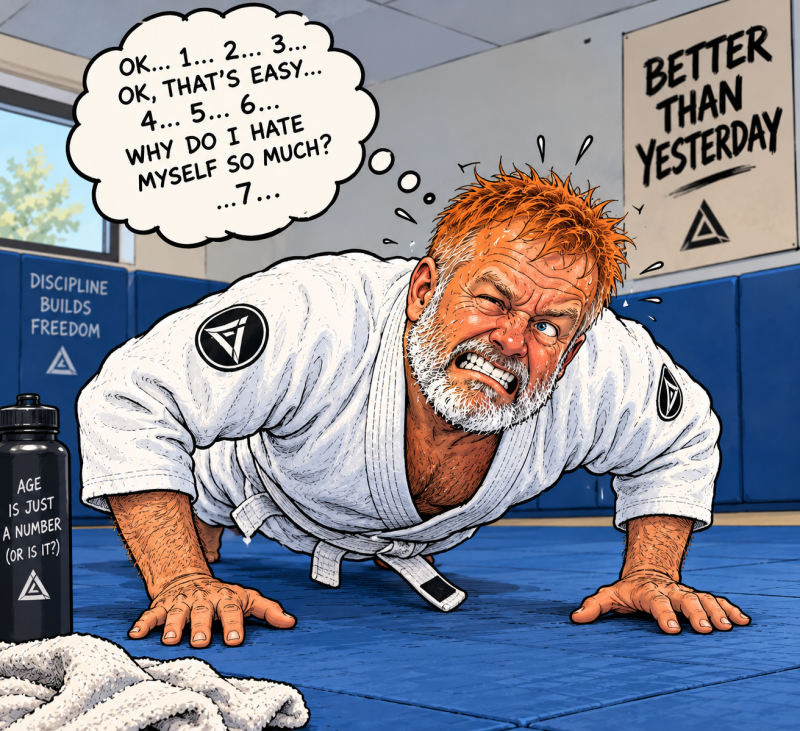
Let me explain: I could do, say, 10 push-ups. If I pushed a little, I could do 15-20, but then I’d already be tired, and if I tried several sets of 15-20 push-ups, I’d kill myself, and it’s questionable whether I’d even finish all the sets!
So I decided to do 10 sets of only 5 push-ups. Between sets, I’d take a short break of about a minute, then do 5 more push-ups. I wouldn’t even feel those 5 push-ups. Only around the eighth set would I start to strain a little. That way, I got through 10 sets of five push-ups with no problem in a short time.
The next day was the same with squats: no forcing it, just a few sets with fewer reps, a couple of crunches, and then push-ups again the next day.
My workouts were short and “painless,” but I was still doing something and pushing a little, so they weren’t hard to do. The most important thing for a beginner is getting used to regular training, mentally (and physically, too). In an easy and fun way, working out became a regular part of my everyday life! Every week or two I’d “raise the bar” a little and add a few reps.
Once workouts become part of your life, you can push yourself to the limit. But you have to be mentally ready.
Add comment
Comments